Commercial water-treatment information for Palm Beach CountyBy Simple Water Service · West Palm Beach, FL
Existing equipment guide

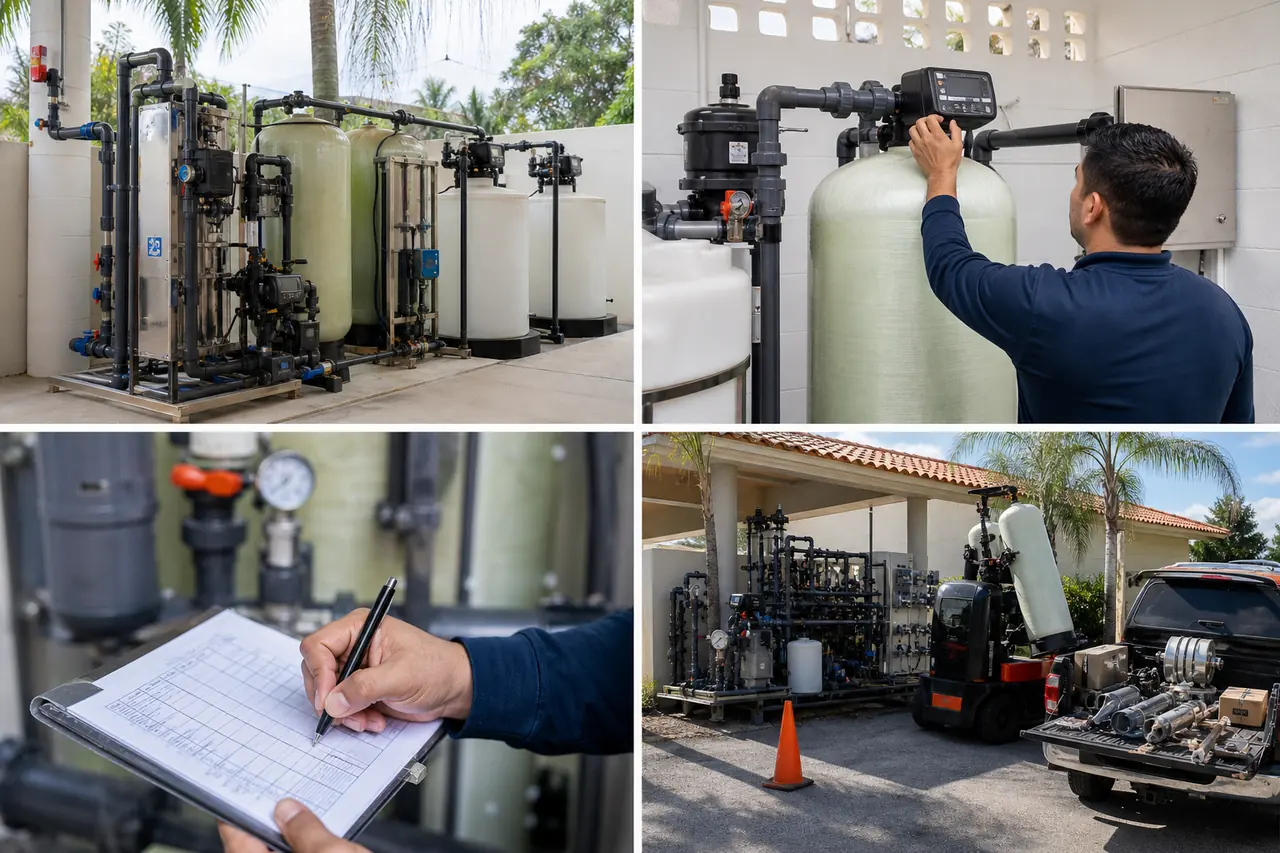
A practical guide to common commercial water-treatment stages

Commercial water-treatment equipment is configured for the water objective and property needs. This guide helps facility teams describe what they see; it does not mean every site has—or needs—every stage.

Call (561) 309-6270
Built for existing equipment

Commercial water-treatment equipment is configured for the water objective and property needs. This guide helps facility teams describe what they see; it does not mean every site has—or needs—every stage.

Water softeners

A softener is typically used where hardness control matters. The system design, resin condition, brine components and actual water use influence the maintenance conversation.

Carbon vessels

Activated carbon may be used to address chlorine, chloramine, taste, odor or other treatment objectives depending on the design. Vessel configuration and media history matter.

RO, DI and UV equipment

Reverse osmosis, deionization and ultraviolet equipment each have distinct purposes and maintenance considerations. The right discussion starts with the model, process water use and existing configuration.

Multi-stage systems

Some commercial installations combine stages. Document what is visibly installed rather than assuming every system includes every technology.

Facility-specific context

Relevant information for the places that use the equipment

These are practical starting points for a commercial conversation. The actual system and property determine the right scope.

Restaurant commercial water equipment

Food & hospitality

Identify the equipment and how it supports the facility’s water use.

Property commercial water treatment equipment

Property systems

Use labels, photographs and prior service records to describe a mechanical-room setup.

Specialized water treatment equipment

Specialized systems

Start with the actual equipment and operational requirement at the facility.

Useful first call

Three details to bring to the conversation

01

Facility

Property location, point of contact and access context.

02

Equipment

Photos, labels, visible stages and relevant service records.

03

Reason for the call

What changed, what is due or what the facility needs to understand.